DIY Fleshlight: How to Make One at Home
Store-bought strokers are great, but they’re not cheap — and sometimes the urge hits and you want a solution now. That’s where the DIY fleshlight comes in. With a few household items you already own, you can build a homemade fleshlight in about ten minutes that feels shockingly good. This guide walks you through exactly how to make a fleshlight at home, which methods actually work, and how to keep the whole thing clean and safe.
What Is a DIY Fleshlight?
A fleshlight is a male masturbation sleeve — a soft, textured tunnel designed to mimic the real thing. The branded ones cost anywhere from $50 to $100. A DIY fleshlight recreates that same sensation using stuff from around the house: towels, sponges, latex gloves, a cup or bottle. It won’t have the fancy molded texture of a premium toy, but done right, it gets impressively close for zero dollars.
The concept is simple. You need three things: a warm, soft, wet inner surface, something to hold it in a tube shape, and a bit of lube. Every method below is just a different way of hitting those three notes.
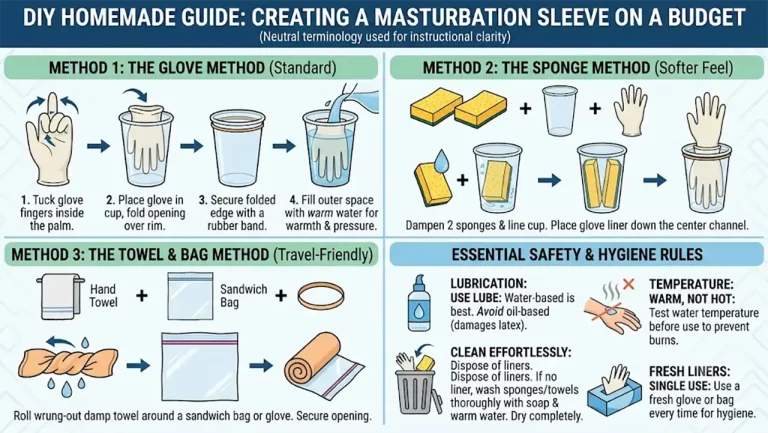
How to Make a Fleshlight: The Towel Method
This is the classic, and for good reason — it’s fast, it works, and you almost certainly have everything already.
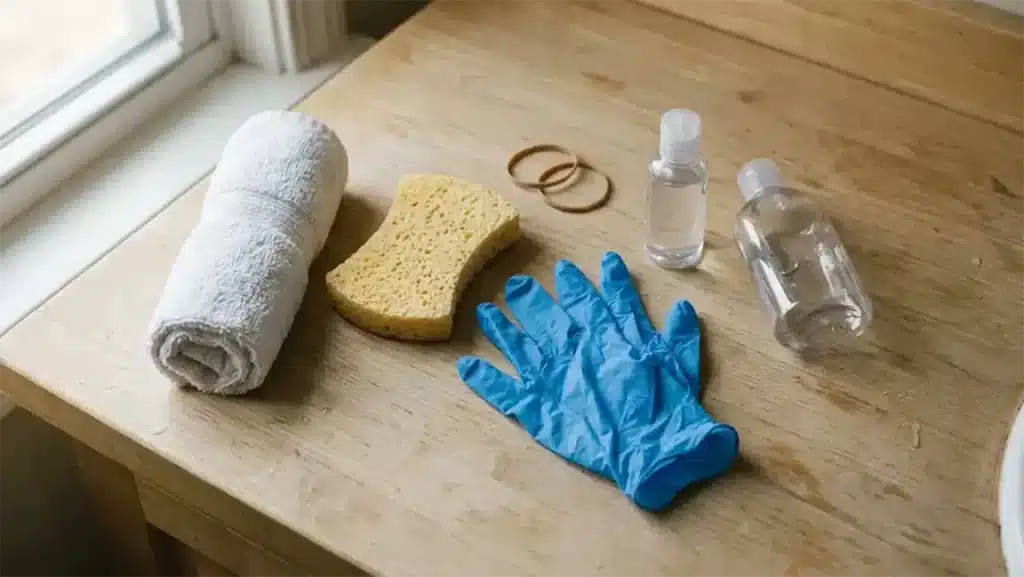
You’ll need a hand towel, two latex or nitrile gloves (a sandwich bag works too), a rubber band or two, and some lube. Here’s how to make a homemade fleshlight the towel way:
- Dampen the towel with warm water — not hot, just pleasantly warm — and wring it out so it’s damp, not dripping.
- Lay a glove or bag open along one edge of the towel.
- Roll the towel up with the glove inside, so the opening of the glove lines up with one end of the roll.
- Fold the mouth of the glove back over the outside of the towel and secure it with a rubber band so it stays put.
- Add lube inside the glove, and you’re ready to go.
The rolled towel gives you grip and pressure; the glove gives you a smooth, waterproof inner sleeve. Adjust the tightness of the roll to dial in the pressure you like.
The Sponge Method
If you want something a little softer and squishier, sponges are your friend. Grab two or three kitchen sponges, a tall cup or an empty chip can, a glove or bag, and lube.
Line the inside of the cup with the sponges so they form a tunnel down the middle — dampen them with warm water first for that lifelike feel. Slide a glove or bag into the center so its opening folds over the rim of the cup, then secure it with a rubber band. The sponges compress as you go, which gives a softer, more cushioned sensation than the towel method. Add lube and enjoy.
The Bottle-and-Bubble-Wrap Method
For a firmer, more textured feel, try this one. Take an empty plastic bottle, cut off the bottom, and line the inside with bubble wrap (bubbles facing in) plus a glove or bag over the top. The bubbles create a bumpy texture that some guys swear by. Just be careful with any cut plastic edges — sand them down or cover them with tape so nothing sharp is anywhere near the action.
Lube Is Not Optional
Whatever method you pick, lube makes or breaks the experience. Dry friction against a glove or bag is a fast track to soreness. Water-based lube is the safest bet — it’s body-friendly and won’t degrade latex. In a pinch, some people reach for household alternatives, but honestly, a cheap bottle of proper water-based lube costs a couple bucks and is worth it. Never use anything oil-based with latex gloves; it breaks them down.
Keep It Clean and Safe
The upside of the glove-or-bag approach is that cleanup is easy: the sleeve is disposable. Toss it, wash your hands, done. If you skip the glove and go straight sponge-or-towel on skin, you’ll need to wash everything thoroughly afterward with soap and warm water and let it dry completely — damp fabric breeds bacteria fast, and nobody wants that.
A few safety notes worth repeating:
- Watch the temperature. Warm water feels great; hot water burns. Test it on your wrist first.
- Mind the edges. Any cut bottle or can needs its edges taped or sanded. This is the number one way people hurt themselves with DIY toys.
- Fresh materials every time if you’re not using a disposable liner. Reusing a damp towel from yesterday is asking for trouble.
DIY vs. the Real Thing
Let’s be honest: a homemade fleshlight is a fun experiment and a solid stopgap, but it’s not going to fully replace a real toy. Premium strokers have molded internal textures, better materials, and last for years. If you find yourself making a new DIY setup every few days, it’s probably cheaper and nicer to just invest in the real deal. Think of the homemade version as the gateway — a way to figure out what pressure and texture you like before you spend money.
Fuel for the Session
A good stroker is only half the equation — you still need something to watch. If you’re building the mood, dig through our ranked directory of the best porn sites and line up your favorites before you start. Everything’s tested and sorted so you’re not wasting time hunting.
Final Thoughts
Making a fleshlight at home is genuinely easy — ten minutes, a few household items, and a bit of lube is all it takes. Start with the towel method since it’s the most reliable, experiment with sponges or bubble wrap once you know what you like, and always keep hygiene front of mind. Cheap, quick, and surprisingly satisfying. Have fun out there.
More from the Blog